By the Authority Solutions® Editorial Team | Published: April 2026 | Last Updated: April 2026
How Local Businesses Can Get Cited in AI-Powered Search
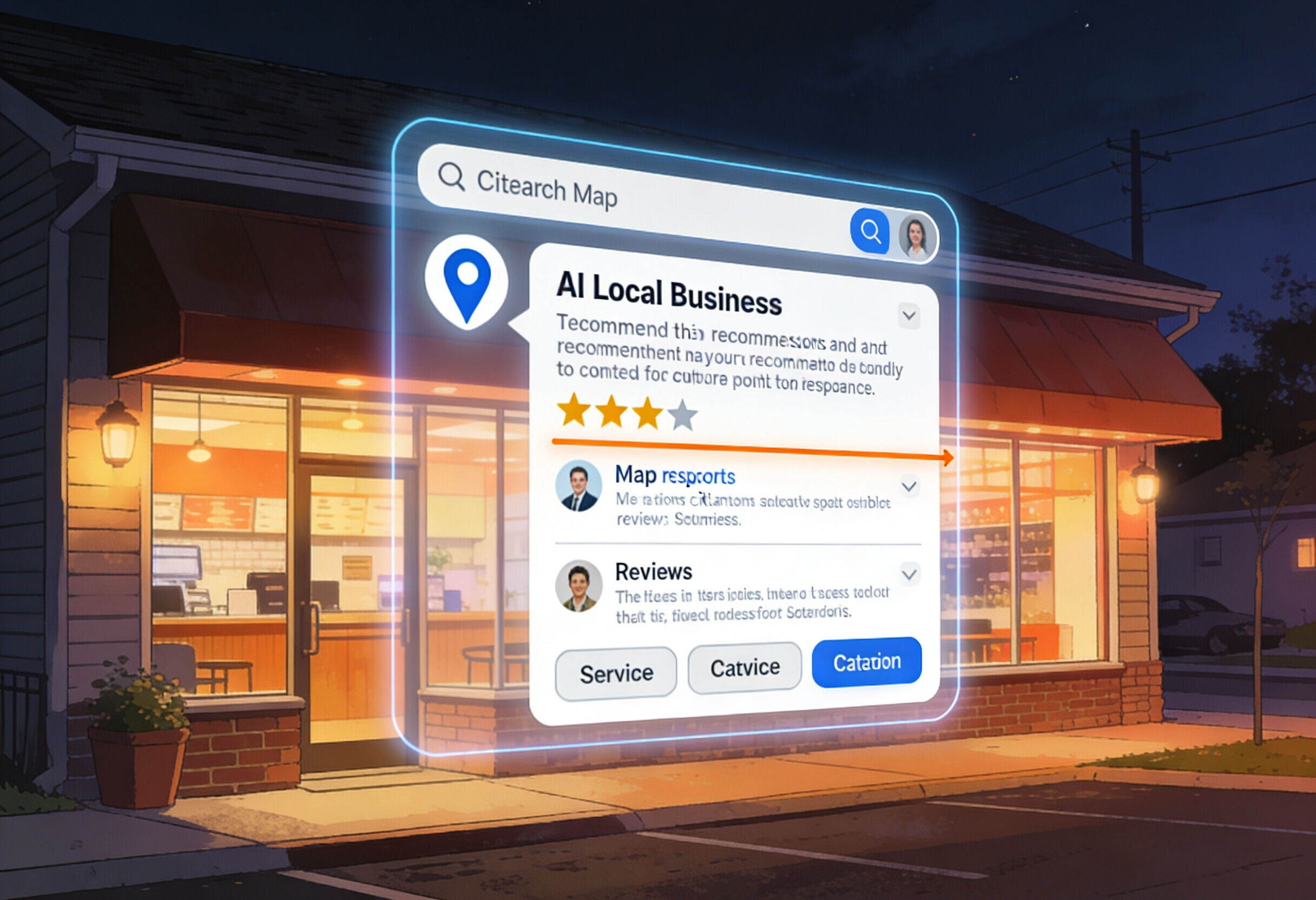
AI-powered search is no longer limited to informational queries. When users ask Google AI Overviews "best plumber near me," Perplexity "affordable dentist in Austin accepting new patients," or ChatGPT "who should I call for emergency HVAC repair in Houston," these platforms generate AI-synthesized responses that recommend specific businesses by name. The businesses cited in these responses receive qualified leads from a channel that most local competitors are not yet optimizing for - creating a first-mover advantage for local businesses that begin GEO optimization now.
Local GEO differs from general GEO because the entity signals that drive local AI citation are anchored in geographic data - Google Business Profile optimization, local directory consistency, location-specific content, and regional review accumulation. This guide covers the specific optimization strategies that enable local businesses to appear in AI-generated responses to location-based queries.
The Local AI Citation Pipeline
When an AI platform responds to a local service query, it draws from three primary data sources: Google Business Profile data (business name, category, location, hours, reviews, services, attributes), local directory and citation data (Yelp, BBB, industry-specific directories with consistent NAP information), and website content (service descriptions, location pages, FAQ content, blog articles with local relevance). The AI synthesizes these sources to identify businesses that match the user's query by service type, location, reputation, and relevance. Businesses with strong, consistent signals across all three sources have the highest citation probability.
GBP Optimization for AI Citation
Complete Every Available Field
AI systems process Google Business Profile data programmatically - every field you populate provides an additional data point for matching your business to relevant queries. Businesses with fully completed profiles (business description, service list, service area, attributes, product catalog, FAQ responses, hours, photos) appear in AI responses more frequently than businesses with partially completed profiles because the AI has more information to evaluate when determining relevance and trustworthiness.
Service Descriptions with Claim-Evidence Patterns
Your GBP business description and service descriptions should follow the same claim-evidence formatting that makes website content AI-extractable. "We offer plumbing services" provides minimal information for AI citation. "Licensed residential and commercial plumbing services in Houston, TX, including emergency repairs (average response time 45 minutes), water heater installation, drain cleaning, and sewer line inspection, serving the greater Houston area since 2005" provides specific, factual claims (licensed, 45-minute response, since 2005) and comprehensive service enumeration that the AI can match against specific user queries.
Q&A Section Management
Google Business Profile includes a Q&A section where users can ask and answer questions about the business. AI systems process these Q&A pairs as structured information sources. Proactively populate this section with common customer questions and authoritative answers - pricing ranges, service area boundaries, scheduling availability, qualifications, and specialties. Each Q&A pair creates a citation-ready information unit that the AI can reference when responding to matching queries.
Review Strategy for AI Visibility
Reviews influence AI citation in two ways. Quantitative review signals - overall rating, review count, review recency - contribute to the business's perceived reputation and trustworthiness. Qualitative review content - the specific words customers use in their reviews - provides semantic signals that AI systems process when matching businesses to queries.
A review that says "Great service" provides a positive rating signal but minimal semantic value. A review that says "Called at 10 PM for an emergency pipe burst and they arrived within 30 minutes. Fixed the issue quickly and cleaned up afterward. Fair pricing considering it was after hours" provides rich semantic content that the AI can associate with specific query attributes: emergency service, fast response, after-hours availability, fair pricing, and thorough service.
Encourage detailed reviews by asking satisfied customers specific questions: "Would you mind mentioning what service we performed, how the experience went, and anything that stood out?" Specific questions produce specific reviews that contain the semantic content AI systems process for citation decisions.
Location-Specific Website Content
Service Area Pages
Create dedicated pages for each geographic area your business serves. How AI Search Engines Select and Cite Sources . Each page should include location-specific content - not just the city name inserted into a generic template. Reference local landmarks, neighborhoods, common local issues (climate-related problems, regional building code requirements, local market conditions), and specific customer scenarios relevant to that area. AI systems evaluate location page quality and distinguish between thin, templated location pages and substantive pages with genuine local relevance.
Local FAQ Content
Develop FAQ content that addresses location-specific questions customers ask: "How much does foundation repair cost in Houston?" "Do I need a permit for a bathroom remodel in Harris County?" "What is the average response time for emergency plumbing in the Willowbrook area?" These questions match the natural language patterns users employ when querying AI systems about local services. Each location-specific FAQ pair creates a citation target for geo-modified queries that generic FAQ content cannot serve.
LocalBusiness Schema with Comprehensive Attributes
Implement LocalBusiness schema (or the appropriate subtype - Plumber, Dentist, Restaurant, LegalService) with comprehensive attributes including business name, address, phone, hours of operation, service area (using GeoCircle or GeoShape for service area businesses), accepted payment methods, price range, and aggregate review data. The schema should include areaServed definitions that explicitly name the cities, counties, or regions the business covers - AI systems use this structured geographic data to determine whether the business matches location-specific queries.
Local Citation Consistency
AI systems aggregate business information from multiple directory sources. Inconsistencies across sources - different phone numbers, different addresses, misspelled business names, outdated service descriptions - reduce the AI's confidence in the business entity and lower citation probability. Audit your citation profile across the major directories: Google Business Profile, Yelp, BBB, Facebook, Apple Maps, Bing Places, and industry-specific directories relevant to your vertical. Correct any inconsistencies so that every source presents identical core information: business name, address, phone number, and website URL.
Measuring Local GEO Performance
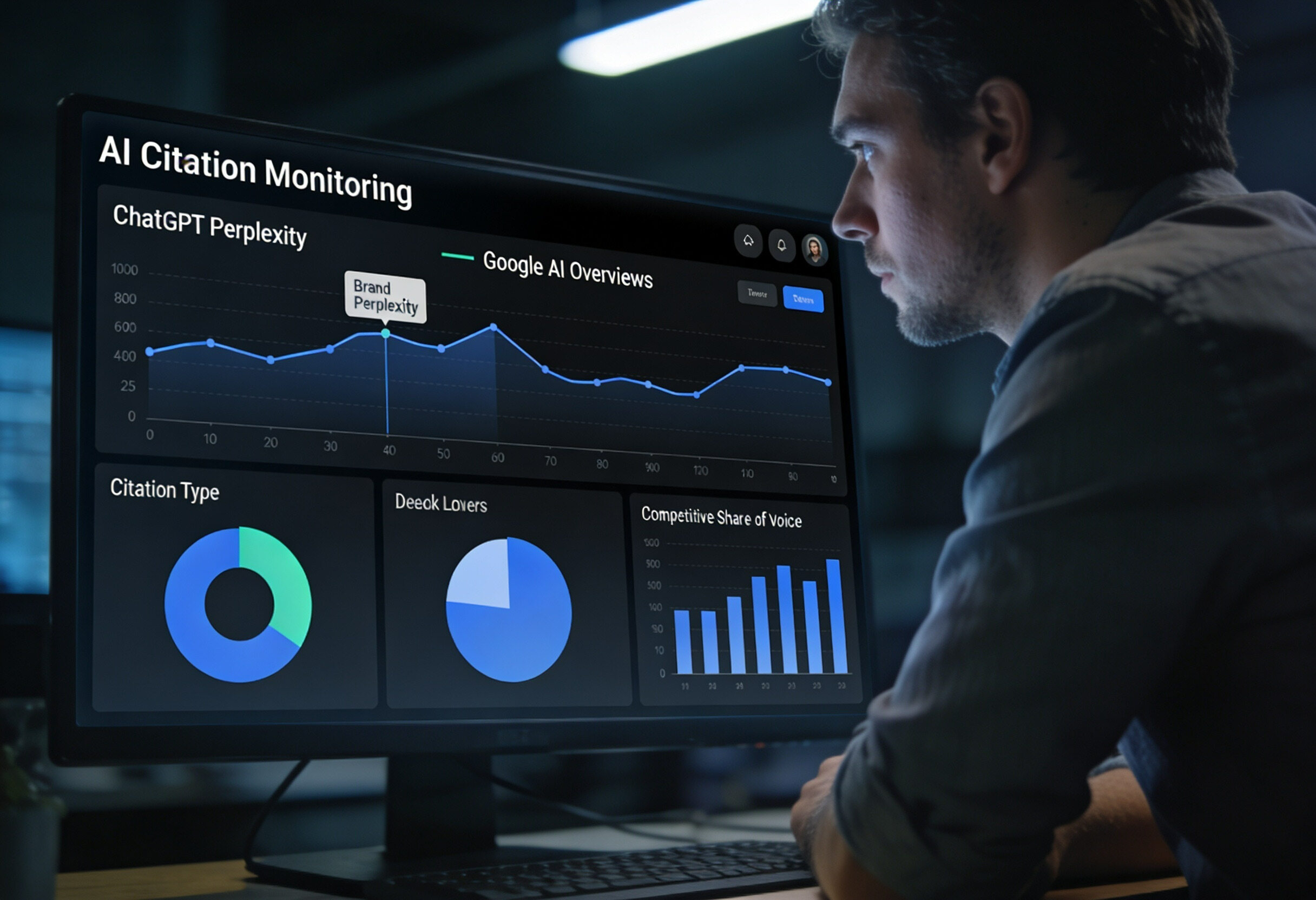
Track local AI visibility through a combination of manual testing and available analytics. Query your target service terms with location modifiers across Google AI Overviews, Perplexity, and ChatGPT weekly: "best [service] in [city]," "[service] near [neighborhood]," "who to call for [specific problem] in [city]." Document whether your business appears, in what position (first recommendation, second, listed among several), and with what context (named and described, or listed without detail).
Google Search Console's AI Overview data provides quantitative tracking for Google specifically - monitor impressions and clicks from AI Overview appearances for your location pages and service pages. Supplement with GBP Insights data showing how customers find and interact with your business listing, which increasingly includes AI-mediated discovery.
Frequently Asked Questions
How important are reviews for local AI citation?
Very important. AI systems use review signals (count, rating, recency, content) as primary trust indicators for local business recommendations. A business with 200 reviews averaging 4.7 stars will be cited over a competitor with 15 reviews averaging 4.9 stars because the volume provides greater statistical confidence. Focus on consistently generating reviews (aim for 5 to 10 new reviews per month) rather than achieving perfect ratings with low volume.
Do I need separate GEO optimization for each AI platform?
Not separately, but with awareness of platform differences. Google AI Overviews draws heavily from GBP data, making GBP optimization the highest priority for Google. Perplexity performs real-time web searches, making website content quality and freshness more important. ChatGPT uses Bing's index, making Bing Places optimization relevant alongside website optimization. The foundational work (GBP optimization, citation consistency, location content, schema markup) benefits all platforms simultaneously - platform-specific optimization provides marginal gains on top of a strong universal foundation.
Is local GEO relevant for service area businesses that do not have a physical storefront?
Absolutely. Service area businesses (plumbers, electricians, mobile services, home healthcare) are frequently the subject of local AI queries. GBP optimization, review accumulation, and location-specific content are equally important for SABs - the only difference is that SABs define service areas rather than displaying a physical address. AI systems recommend SABs based on service area coverage, reputation signals, and content relevance using the same evaluation framework they apply to storefront businesses.