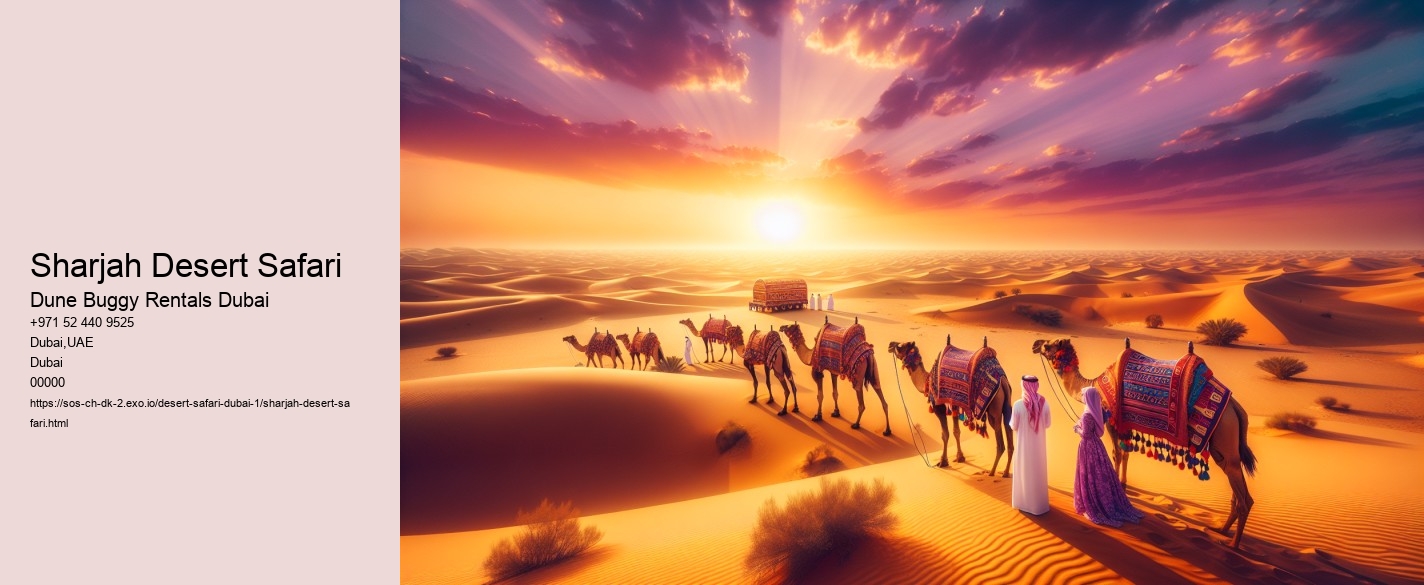
The first time you set eyes on the dunes outside Sharjah, the desert doesn't shout for attention; it hums. Wave after wave of sand rises and settles like the surface of a slow-moving sea, its crests shifting with the wind and the light. By late afternoon, the color deepens from gold to amber to the soft burn of copper, and the horizon blurs into heat and possibility. A Sharjah desert safari isn't just a checklist of activities; it's the feeling of scale, the hush that settles between gusts of wind, and the way time seems to stretch as the sun drops and the stars take over.
Unlike the glitzier reputation of some neighboring emirates, Sharjah's take on the desert safari leans into heritage, nature, and context. You see this in the way guides talk about the land, explaining how to read the dunes, which patterns betray soft sand and which hold firm, or pointing out the hardy ghaf trees that anchor life in the desert. On the approach to Al Badayer-often called “Big Red” for its iron-rich tint-drivers stop to let air out of their tires, and even that simple ritual feels like a nod to the realities of the terrain. The engine's hum softens, the rubber grips differently, and then you're moving. Dune-bashing is part sport, part dance: climbing a ridge in a low gear, pausing on the knife-edge of a crest, and sliding down in controlled arcs that leave the stomach laughing a beat behind the brain.
There's a common rhythm to desert safaris: the surge of adrenaline, the laughter that follows, the quiet moments when the vehicle stops and you step out to feel the wind on your face. Sandboarding turns the desert into an improvised playground, the board whispering over grains that have been blown smooth for millennia. A short camel ride folds you into a tradition far older than tourism, the camel's rolling gait a reminder of caravan routes that stitched together oases and coasts long before highways did.
What makes Sharjah distinctive is how often the desert adventure is paired with stories of the past. At Mleiha, the archaeological landscape pushes the timeline of human presence back thousands of years. Bronze Age tombs and settlement remains sit within view of the dunes, and the visitor center connects the fun of a safari to the long arc of life here-traders and pearl divers, pastoralists and farmers, people who learned to read the land's scarce offerings and make them enough. If you join a guided evening out of Mleiha, a telescope might be pointed at a planet rising in the east, and an astronomer will help name the constellations. Out in the open, the night sky feels both intimate and infinite, unspooling from horizon to horizon with startling clarity.
Desert Safari Dubai sunset time
- Desert Safari Dubai deals
- Desert Safari Dubai best time to visit
- Desert Safari Dubai Eid offers
- Desert Safari Dubai WhatsApp
- Desert Safari Dubai sunset time
- Desert Safari Pickup Dubai
The desert is not empty. Even a short pause reveals signs of life: the stiff-legged scuttle of a beetle, the delicate track of a lizard, a flash of movement that might belong to a desert fox. With luck and patience, you might spot sand gazelles skirting the edges of the dunes in the cooler hours. The ghaf's pale leaves hold on through months without rain, and your guide might pluck a sprig of desert plant to show the salt that crystals at its edge, a tiny survival strategy written on the leaf itself. Sharjah's broader conservation efforts-visible at places like the Arabian Wildlife Center-remind visitors that a safari is not just a thrill ride but an encounter with a fragile ecosystem.
As daylight fades, the desert undergoes one of its quicksilver transformations. The sun seems to race the final stretch to the horizon, and shadows stretch long and dramatic across the wind-scalloped sand. Photographers sprint up ridges to catch the moment; families fall quiet. Camps light up slowly: lanterns hung along pathways, a glow from the kitchen where the grill has been warming all afternoon. Desert Safari Dubai best time to visit The scent of cardamom drifts from pots of Arabic coffee.
Desert Safari Dubai sunset time
- Desert Safari Dubai all inclusive
- Desert Safari Dubai schedule
- Desert Safari Dubai multilingual guide
- Desert Safari Dubai emergency contact
- Desert Safari Dubai online booking
- Red dunes desert safari Dubai
Dinner is often a generous spread-grilled meats, bright salads, fragrant rice dishes-and somewhere on the table there's likely to be luqaimat, fried dough balls drizzled with date syrup that taste like the definition of comfort. Desert Safari Dubai Eid offers In Sharjah, entertainment tends to respect the emirate's cultural sensibilities, with traditional drumming or a whirl of tanoura rather than nightclub theatrics. A henna artist moves quietly between guests, her cone of paste sketching vines and petals that will stain the skin by morning. In another corner, a falconer might unhood a bird and explain how the bond between handler and falcon is built; the falcon's eyes are not romantic but clinical, assessing distances and opportunities in a second.
If the day's energy rises and falls, night brings a steadier calm. The desert cools; conversation softens. It's surprising how quickly your eyes adjust to the darkness, how many stars emerge once the last camera flashes fade. The Milky Way, on a clear night, looks less like a concept and more like a thing you could reach out and touch. Guides point out seasonal constellations, meteors scratch quick paths across the dome, and somewhere, far off, a dog barks and stops, and the silence stitches itself back together.
A few practical truths reveal themselves, too. The best months are from October to April, when the heat is more forgiving and the air crisper. Loose, light clothing and closed shoes save you from sand's hot insistence; a scarf keeps the wind in your favor. Sunscreen and a hat are not suggestions; water is your most reliable companion. Desert Safari Dubai sunset time Responsible operators will remind you that the desert is both powerful and delicate: take your trash, tread lightly around plants, switch off bright lights when you can so the sky can be a sky again.
There is a temptation to compare every desert to every other, to make a shorthand of dunes and sunsets as if they're all the same. Sharjah resists that. Its safari experiences often pull you sideways into context-archaeology, astronomy, ecology-until the evening becomes more than the sum of its parts. Desert Safari Dubai . You come away with a sense that the desert is not simply a backdrop for tourism but a protagonist in a long story of adaptation and continuity. Perhaps the best proof of this is how many people leave with a small pocket of quiet in their chest, a remembered hush they can return to days or months later when city noise presses in.
On the drive back, the tires are re-inflated, the air conditioner hums, and the yellow lights of the city rise in bands ahead. It's tempting to think the desert closes behind you once you pass the last dune, but it doesn't. The wind will keep combing new patterns into the sand through the night. Tracks will soften and vanish by morning. And somewhere out there, at the hour when the air is coldest and the sky is thick with stars, the desert will be doing what it's always done-holding the day's heat and stories, waiting for the next set of footprints to arrive.


